

Dussehra Home Buying in Pune: How Micro-Zoning Could Change the Way Property Is Valued
Ask any Pune family when they booked their flat, and there's a good chance the answer is "Dussehra." The Dussehra festival has always been a favourite day for big purchases, and a home is about as big as it gets. This year it falls on Tuesday, 20th October 2026.
If you're planning to book around then, there's a bit of news you should know about first. The state is looking at a new way to set property rates in Pune, called micro zoning. Nothing has changed yet, and it may take a while. But it tells you a lot about how your future home will be valued.
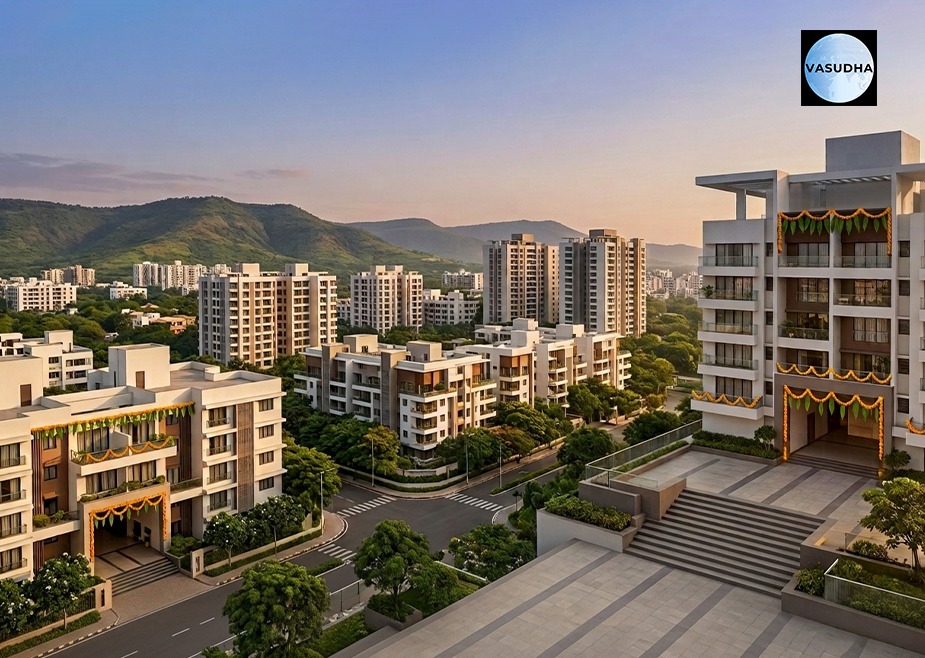
Why do so many people in Pune buy a home on Dussehra?
Mostly because it feels right. Dussehra is one of the sade teen muhurat, the three and a half most auspicious days in the Hindu calendar. People buy gold, cars and homes on this day, and a lot of families do a small puja at the new place, even if it's still a bare shell.
There's a practical side too. Many developers run festive offers around the Dussehra festival, and banks often waive or cut home loan processing fees during the festive season. And since most people have a few days off, it's easier to visit sites together as a family.
So the timing makes sense. The only catch is making sure the excitement of the day doesn't rush the actual decision.
What is a ready reckoner rate, and why does it affect your cost?
The ready reckoner rate is the lowest value the government puts on a property in a given area. Your stamp duty is worked out on this value or your agreement value, whichever is higher.
Here's a simple example. Say you agree to buy a flat for ₹90 lakh, but the ready reckoner value for that flat comes to ₹95 lakh. You'll pay stamp duty on ₹95 lakh, not ₹90 lakh.
The Department of Registration and Stamps in Maharashtra sets these rates, usually once a year. Most buyers never look them up. They probably should.
What is micro-zoning, and what is Pune planning?
Micro-zoning means cutting large rate zones into smaller pieces, so each small area gets a rate that fits it better.
At the moment, homes in one broad zone usually share the same rate. According to a recent Pune Mirror report, the Department of Registration and Stamps has written to the Pune Municipal Corporation (PMC) asking for GIS data. GIS is basically a detailed digital map. It shows roads, buildings, open spaces and public facilities.
The idea is to use that map to look at things like how wide the road is, what infrastructure and civic amenities are nearby, whether the area is residential or commercial, and what kind of buildings are there. Each small zone would then get its own rate.
How can homes in the same area be worth such different amounts?
Think about almost any older Pune neighbourhood. On the main road, you might have a new society with a clubhouse, covered parking and a wide entry. Two lanes behind it, there's a 35-year-old building on a road where two cars can barely pass. A little further on, there's a slum settlement.
Right now, all three could sit in the same rate zone. That doesn't make much sense, and it's the gap micro-zoning is trying to close.
Will ready reckoner rates in Pune change soon?
Not immediately, no. There's no timeline, no new rates, and no word yet on which pockets would go up or down.
So far, officials are only collecting data. That means there's no reason to rush into a booking, or hold off on one, just because of this news.
What it does tell you is the direction things are moving in. The exact location of a home, meaning its road, its access and what's around it, is likely to count for more over time. That's worth keeping in mind whatever you buy.
What could micro-zoning mean for redevelopment in Pune?
It could make location details matter more when a redevelopment project is being valued and planned.
Redevelopment in Pune has really picked up over the last few years. Walk through Kothrud, Erandwane, Sahakarnagar or parts of Camp and you'll see it. Many cooperative housing societies built in the '80s and '90s are dealing with leaking terraces, cracked walls and no lifts. For older members, climbing four floors every day is a real problem. Rebuilding is often the only practical fix.
If micro-zoning comes in, a society on a wide main road with good amenities nearby may be valued differently from one tucked inside a lane. Developers and consultants will likely factor that in.
How does housing society redevelopment usually work?
The process differs a little from society to society, but it generally goes like this:
- Members discuss it at a general body meeting and set up a redevelopment committee.
- The society appoints a project management consultant, an architect and a legal adviser.
- The consultant prepares a feasibility report. This looks at the plot, how much can legally be built on it (the FSI) and rough costs.
- The society invites offers from developers and compares them in the open, following the state's redevelopment guidelines.
- The society and the chosen developer sign a development agreement. It covers the new carpet area, monthly rent during construction, corpus fund and deadlines.
- The developer gets building plan approvals from the PMC and other departments.
- Members move out, the old building comes down, and the new one goes up.
If you're on a society committee, one small tip: keep good records of your plot's road width, access and nearby facilities. These already matter in planning. They may matter even more later.
What should you check about a location before booking this Dussehra?
Look past the area name. Two flats in the same area can be very different to live in.
Whether you're looking at upcoming projects or a ready home, it helps to ask:
- How wide is the road leading to the building? Main road or inside lane?
- Are schools, hospitals, a market and a bus stop close by?
- Are any new roads, flyovers or Metro routes planned nearby?
- What's being built around the site right now?
- Is the project registered on MahaRERA, and what is its promised completion date?
- What is the current ready reckoner rate? You can check it on the IGR Maharashtra website and get a rough idea of your stamp duty.
Try to visit the site twice, once on a weekday morning and once in the evening. Traffic and noise can feel completely different at those times.
Should you buy ready-to-move or under-construction?
It depends on what you need. A ready flat means you see exactly what you're paying for and can move in quickly. An under-construction flat usually gives you more time to pay, and sometimes a lower price. The location checks above apply either way.
Are luxury residential projects affected differently?
In a way, yes. Premium homes are already priced on the very things micro-zoning looks at: access, greenery, fewer homes per acre and good civic support.
People who buy in luxury residential projects usually pay extra for a better location, not just better tiles. If government rates start to follow location more closely, that difference could show up on paper as well.
NIBM Road is a good example. Over the years it has become one of the more sought-after areas for premium residential projects in NIBM Road, mostly because it's green and quieter than much of the city, and still close to Camp, Kondhwa and Hadapsar. Smaller developments here, like Vasudha Realty's Atman Nirvana, have been planned around fewer homes and more open space. For a buyer, the question isn't whether a project calls itself "luxury." It's whether the location works for the way you actually live.
How do you make a sensible choice this Dussehra?
A few things that help:
- Work out your full budget, including stamp duty, registration and interiors. People often forget the last two.
- Shortlist residential projects in Pune by exact location, not just by area.
- Check the developer's past projects and RERA registration.
- Get your home loan approved in principle before the festival rush.
- Read the agreement properly. If anything is unclear, have a lawyer look at it.
So, should micro-zoning change your Dussehra plans?
Probably not. It isn't a reason to rush, and it isn't a reason to wait. What it does is remind you that where a home sits, down to the road and the lane, matters more than most people think.
Take your time with the location. Check the paperwork. Ask a lot of questions, even ones that feel silly. And if NIBM Road is on your list, Vasudha Realty is one developer worth visiting while you're looking around.
Happy Dussehra, and good luck with the search.
FAQ
For many families, yes. It's considered a lucky day, and developers and banks often run festive offers. Just make sure the budget, location and paperwork are right, and don't go by the date alone.
It means breaking big rate zones into smaller ones. Each small zone gets its own government rate, based on things like road width, nearby amenities and the type of buildings around it.
No. The Department of Registration and Stamps has only asked the PMC for GIS data so far. No new rates or dates have been announced.
It's too early to say. Some areas could go up and some could go down. We'll only know once the data is studied and new rates are fixed.
It's the minimum value the Maharashtra government sets for property in an area. Stamp duty is charged on this or on your agreement value, whichever is higher.
Go to the IGR Maharashtra website, choose the district, taluka and area, and you'll see the rate.
There's no real need to. There's no timeline yet, so if you find the right home at a fair price, this proposal alone shouldn't hold you back.
Location details like road width and nearby amenities may carry more weight when a redevelopment project is valued. It's a good idea for societies to keep these details on record.
Usually the society's redevelopment committee, a project management consultant, an architect, a legal adviser, the developer, and the PMC for approvals.
The MahaRERA number, the developer's past work, road access, nearby amenities, any planned infrastructure, and your full cost including stamp duty and registration.